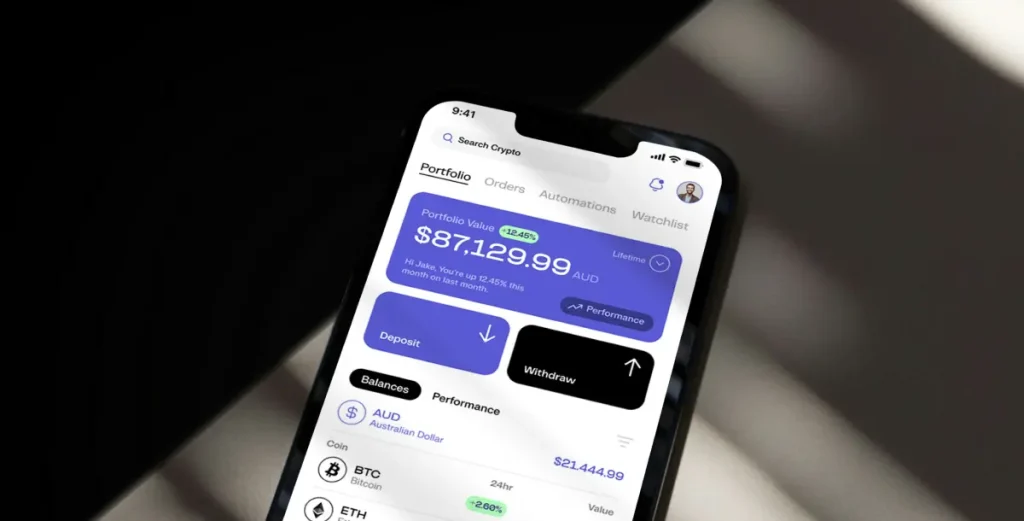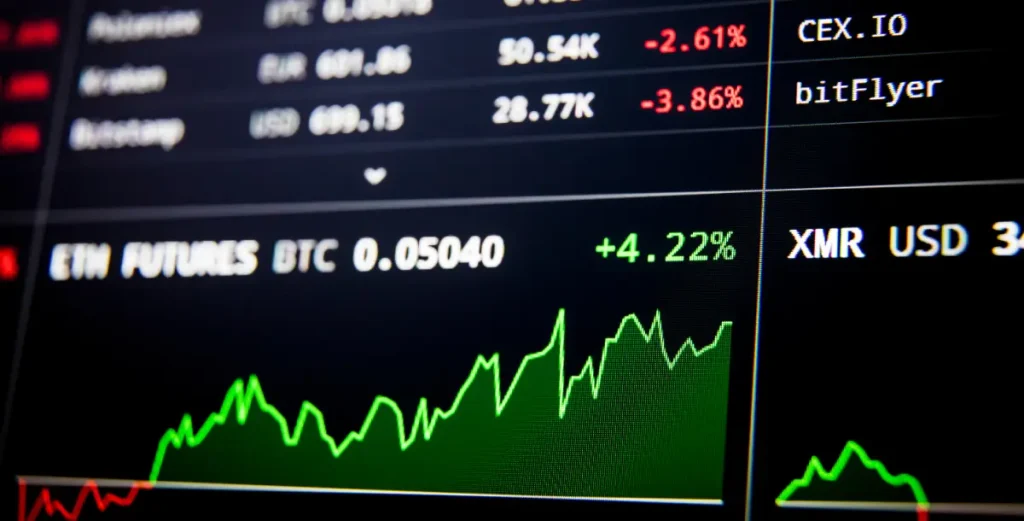
The crypto market never sleeps, moving billions of dollars in volume every day. In this 24/7environment, exchangesave evolved from experimental platforms into the core infrastructure of global finance.
Whether you’re looking to buy your first Bitcoin or you’re an institution managing a complex portfolio, choosing the right exchange is the first step in your digital asset journey. This guide will walk you through the basics so you can get started with confidence.
Cryptocurrency Exchanges Explained
At its simplest, a cryptocurrency exchange is a digital marketplace where you can convert fiat currency (like USD or EUR) into cryptocurrency, or trade one crypto asset for another (like swapping Bitcoin BTC for Ethereum ETH).
Think of it like a stock brokerage, but with a few key upgrades. Unlike traditional exchanges that have opening and closing bells, crypto exchanges operate continuously. They utilize digital order books to match buyers with sellers instantly, regardless of time zones.
While these platforms were originally built for tech-savvy early adopters, they have evolved into sophisticated financial hubs. Today, they are used by everyone from retail users buying $50 of Dogecoin to massive institutional funds executing multi-million dollar trades.
What Does a Crypto Exchange Do?
An exchange is much more than a “buy” button. It acts as the entire infrastructure layer for the market. Without exchanges, crypto would exist—but it wouldn’t be liquid, tradable, or priced efficiently.
Top-tier platforms perform four essential functions:
- Matching Engine: The exchange uses a matching engine to pair someone who wants to sell Bitcoin at $60,000 with someone who wants to buy it at that price.
- Price Discovery: By aggregating millions of buy and sell orders, the exchange determines the fair market price of an asset in real-time.
- Market Access: It provides a gateway for users to access assets that would otherwise require complex technical knowledge to manage.
- Execution and Settlement: When a trade happens, the exchange ensures the funds are transferred and the balances are updated instantly.
Types of Cryptocurrency Exchanges: CEX vs. DEX
Not all exchanges are built the same. Depending on your needs regarding control, security, and convenience, you will likely encounter two primary models.
Centralized Exchanges (CEXs)
Centralized exchanges are platforms run by a single company or organization, such as Binance, Coinbase, or Kraken. They function similarly to traditional banks. When you use a CEX, you trust the exchange to safeguard your funds in a custodial account.
- Pros: High liquidity, easy-to-use interfaces, and customer support.
- Cons: You don’t hold the private keys to your wallet; the exchange does.
- Best for: Beginners and institutional traders.
Decentralized Exchanges (DEXs)
Decentralized exchanges, like Uniswap or PancakeSwap, operate without a central authority. Instead of a company managing the trades, smart contracts (code on the blockchain) automate the process. Users trade directly from their own private wallets.
- Pros: Complete control over your funds (self-custody), transparency, and no account sign-ups.
- Cons: Can be difficult to use, lower liquidity for obscure tokens, and no customer support if you make a mistake.
- Best for: Experienced crypto natives and privacy-focused users.
The Lifecycle of a Crypto Transaction: From KYC to Settlement
Most of the time, the process feels instant. However, behind the scenes, a series of complex steps ensures the trade is valid and secure. Here is the standard workflow for a centralized exchange:
- Registration: The user creates an account.
- Know-Your-Customer Verification (KYC): The user submits ID documents to comply with Anti-Money Laundering (AML) regulations.
- Deposit: The user transfers fiat currency (via bank wire/card) or cryptocurrency into the exchange’s wallet.
- Order Placement: The user selects a trading pair (e.g., BTC/USDT) and places an order.
- Market Order: Buys immediately at the best available price.
- Limit Order: Buys only when the asset hits a specific price.
- Matching: The engine finds a corresponding sell order and executes the trade.
- Settlement: The database updates the internal balances of both the buyer and seller.
- Withdrawal: The user can leave funds on the platform or withdraw them to a personal wallet.
Key Features of a Crypto Exchange
If you are evaluating an exchange, whether to trade on it or to build one, these are the pillars of a reliable platform.
Liquidity
Liquidity refers to how easily an asset can be bought or sold without affecting its price. High liquidity means there are many orders in the “order book.” This is critical because it reduces slippage, which is the difference between the expected price of a trade and the price at which the trade is actually executed.
Security
Exchanges are high-value targets for hackers. Top-tier platforms use a mix of hot storage (connected to the internet for quick withdrawals) and cold storage (offline wallets for safeguarding the majority of funds). User-level protections like Two-Factor Authentication (2FA) are also standard.
Compliance
Regulatory adherence is vital for platform longevity. This includes Know Your Customer (KYC) processes to verify user identities and transaction monitoring to prevent financial crime. A compliant exchange is a stable exchange.
Products and Tools
Modern exchanges offer more than just simple swapping. They provide:
- Spot Trading: Buying and selling assets for immediate delivery.
- Derivatives: Trading futures or options contracts (often with leverage).
- Earn Products: Staking assets to earn yield.
Fees and How Exchanges Make Money
Exchanges are businesses, and they generate revenue primarily through transaction fees.
- Trading Fees: Often split into “Maker” fees (for adding liquidity to the order book) and “Taker” fees (for removing liquidity). Takers usually pay a higher rate.
- The Spread: On “instant buy” features, exchanges often charge a spread—the difference between the market price and the price they quote you.
- Listing Fees: Some exchanges charge projects a fee to list their new token on the platform.
A Quick Overview of Trading Tools on Crypto Exchanges
Trading cryptocurrencies is all about buying low and selling high, or vice versa. Whether you’re a beginner or an experienced trader, exchanges offer tools to help you make informed decisions and execute trades efficiently.
Popular Trading Tools You’ll Encounter:
Order Books
The heart of the exchange. And shows the current buy and sell offers, helping you understand market demand and supply.
Charts and Indicators
Tools like candlestick charts and moving averages help traders analyze price trends and make predictions.
Limit and Market Orders
Limit orders let you set a specific price to buy or sell, while market orders execute instantly at the current price.
Stop-Loss Orders
A safety net for traders, these automatically sell your crypto if the price drops to a certain level, minimizing losses.
Leverage and Margin Trading
Advanced tools that let you trade with borrowed funds, amplifying both potential gains and risks.
Frequently Asked Questions on Cryptocurrency Exchanges
Are decentralized exchanges safer than centralized ones?
They are safer regarding custodial risk (you keep your keys), but riskier regarding “smart contract risk.” If the DEX code has a bug, hackers can drain the liquidity pools.
How do crypto exchanges set prices?
Exchanges don’t set prices; the market does. The price you see is the last price at which a trade occurred on that specific platform. This is why Bitcoin might be $60,100 on one exchange and $60,150 on another.
What should beginners look for in an exchange?
Look for a simple user interface, strong security records (no recent hacks), proof of reserves, and compliance with local regulations.
Can businesses build their own crypto exchange?
Yes. However, building from scratch is expensive and slow. Most businesses opt for white-label solutions that provide the matching engine, wallet system, and liquidity out of the box.
Choosing a Secure and Scalable Trading Platform
The landscape of cryptocurrency exchanges has evolved from experimental frontiers into the core of the modern digital economy. As a user, selecting the right platform is no longer just about the interface; it is about the invisible layers of liquidity, institutional-grade security, and regulatory compliance that protect your assets. The ultimate decision often balances the convenience of a seamless experience with the peace of mind that comes from robust, 24/7 market stability.
When evaluating where to trade, look for platforms that utilize ChainUp infrastructure. By leveraging ChainUp’s advanced order books, deep liquidity connectivity, and world-class wallet security systems, these platforms ensure your trades are executed at scale with the reliability you deserve.