In the rapidly evolving Web3 landscape, the secure management of private keys has become the cornerstone of digital asset custody and cryptographic security. Whether you are an individual using a self-custody wallet or an enterprise building an enterprise-level crypto custody architecture, your choice of Web3 wallet solution directly dictates the security tier of your assets.
This guide explores the dimensions of cold, hot, and warm wallets, multi-sig, and MPC wallets. We will clarify the fundamental differences between custodial and non-custodial wallets and examine how multi-party computation (MPC) technology is redefining the security standards for the next generation of non-custodial MPC wallets.
-
The Core of Web3 Wallets: Public vs. Private Keys
The underlying logic of every Web3 wallet revolves around two components:
-
Public Key (Address): Used to receive assets; this is public-facing.
-
Private Key: Used to sign transactions; this grants true control over the assets.
Whoever holds the private key holds the assets. Therefore, the essence of crypto custody is the secure management of these keys. This principle drives the evolution from custodial wallets to non-custodial wallets, and ultimately to MPC self-custody.
-
Custodial vs. Non-Custodial Wallets: The Essential Distinction
-
Custodial Wallets: Private keys are managed by a third-party platform (e.g., exchange wallets). While this crypto custody model offers a smooth user experience, users do not have actual control over their keys.
-
Non-Custodial Wallets (Self-Custody Wallets): Users maintain exclusive control of their private keys (e.g., MetaMask or hardware wallets). While these non-custodial crypto wallets eliminate platform risk, they require the user to be highly proficient in key management.
-
Security Profiles: Hot, Cold, and Warm Wallets
-
Hot Wallets: Always connected to the internet. They facilitate frequent trading but are vulnerable to online attacks. Most software-based Web3 wallets and exchange wallets are hot wallets.
-
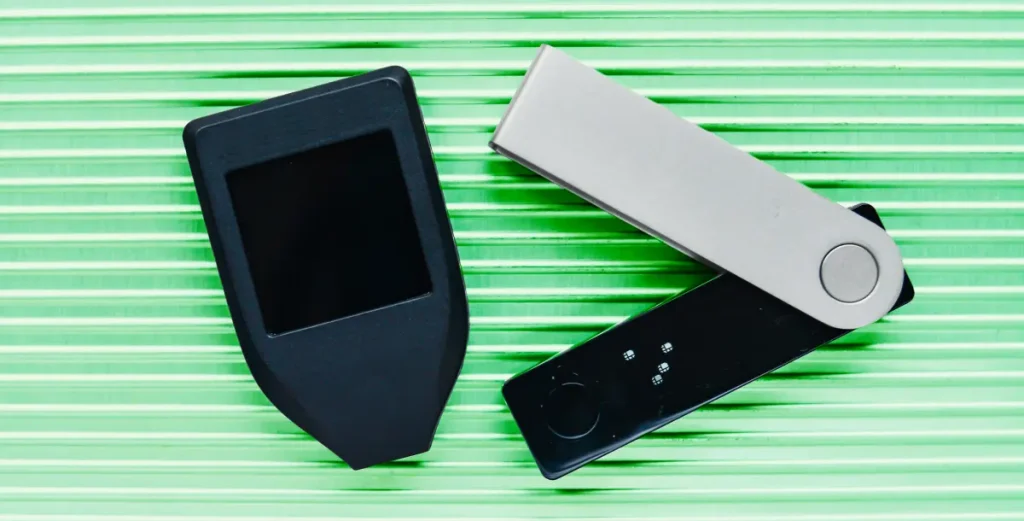
Cold Wallets: Private keys are kept entirely offline (e.g., hardware wallets or air-gapped devices). This is currently the most secure form of digital asset custody for long-term storage.
-
Warm Wallets: A hybrid solution where keys are stored offline, but the signing process occurs in a semi-connected environment. Many enterprise-level crypto custody systems use warm wallets to balance security with operational efficiency.
-
Multi-Sig: An Early Leap in Custody Security
Before the rise of MPC wallets, multi-sig (multi-signature) was the primary solution for enhancing cryptocurrency custody security. It requires multiple private keys to authorize a transaction (e.g., a 2-of-3 setup), significantly reducing the risk of a “single point of failure.”
However, multi-sig has limitations:
-
High complexity in key management.
-
Suboptimal user experience.
-
On-chain visibility of the multi-sig structure.
-
Lack of flexibility for complex enterprise-level asset custody needs.
-
Understanding MPC Wallets and Multi-Party Computation
MPC wallets utilize multi-party computation technology to mathematically split a private key into multiple key shares. No single party ever possesses the full key, yet they can collaboratively produce a valid signature.
This creates a non-custodial MPC wallet architecture: it avoids the risks of a custodial wallet while removing the burden of the user managing a single, vulnerable private key. In an enterprise-level MPC wallet, shares can be distributed across:
-
User devices (TEE or Secure Enclave)
-
Company servers
-
Backup nodes or compliance/risk-control systems
This enables true MPC self-custody.
-
Why MPC Wallets Lead Enterprise-Level Crypto Custody
For businesses requiring robust digital asset custody, MPC solves several critical issues:
-
No Single Point of Failure: A complete private key is never exposed.
-
Flexible Policy Engine: Enables approval workflows similar to multi-sig without the on-chain overhead.
-
Privacy: The signing structure is invisible on-chain.
-
Hybrid Compatibility: Works seamlessly across hot, warm, and cold architectures.
-
Integrating Cold Wallets and MPC Wallets
A professional crypto custody framework usually employs a tiered design:
-
Cold Wallets: For “vault” storage of long-term reserves.
-
MPC Wallets: Used as warm wallets for daily operational fund management.
-
Hot Wallets: For providing small-scale, immediate liquidity.
This multi-layered digital asset custody model achieves the optimal balance between top-tier security and operational agility.
-
The New Trend: Self-Custody in the Web3 Era
The Web3 movement emphasizes self-custody wallets as users move away from trusting custodial wallet platforms. However, traditional non-custodial wallets that are reliant on seed phrases are not user-friendly. Non-custodial MPC wallets are solving this by allowing users to maintain asset sovereignty without the stress of managing a physical seed phrase or a single private key.
-
Choosing Your Solution
-
For Individuals: Use non-custodial wallets for daily transactions, cold wallets for long-term savings, and prioritize self-custody wallets that support MPC.
-
For Enterprises: Avoid pure hot-wallet architectures. Implement MPC wallets as your core crypto custody infrastructure, supported by cold wallets for reserves and warm wallets for operations.
Conclusion: The Future is MPC Self-Custody
The trajectory from custodial to non-custodial, and from multi-sig to MPC, is clear: the industry is moving toward maximizing private key security without sacrificing the user experience.
In the modern Web3 era, non-custodial MPC wallets powered by multi-party computation technology are the new gold standard for enterprise-level digital asset custody. Understanding and adopting an MPC self-custody architecture is the key to building a secure, next-generation financial ecosystem.